
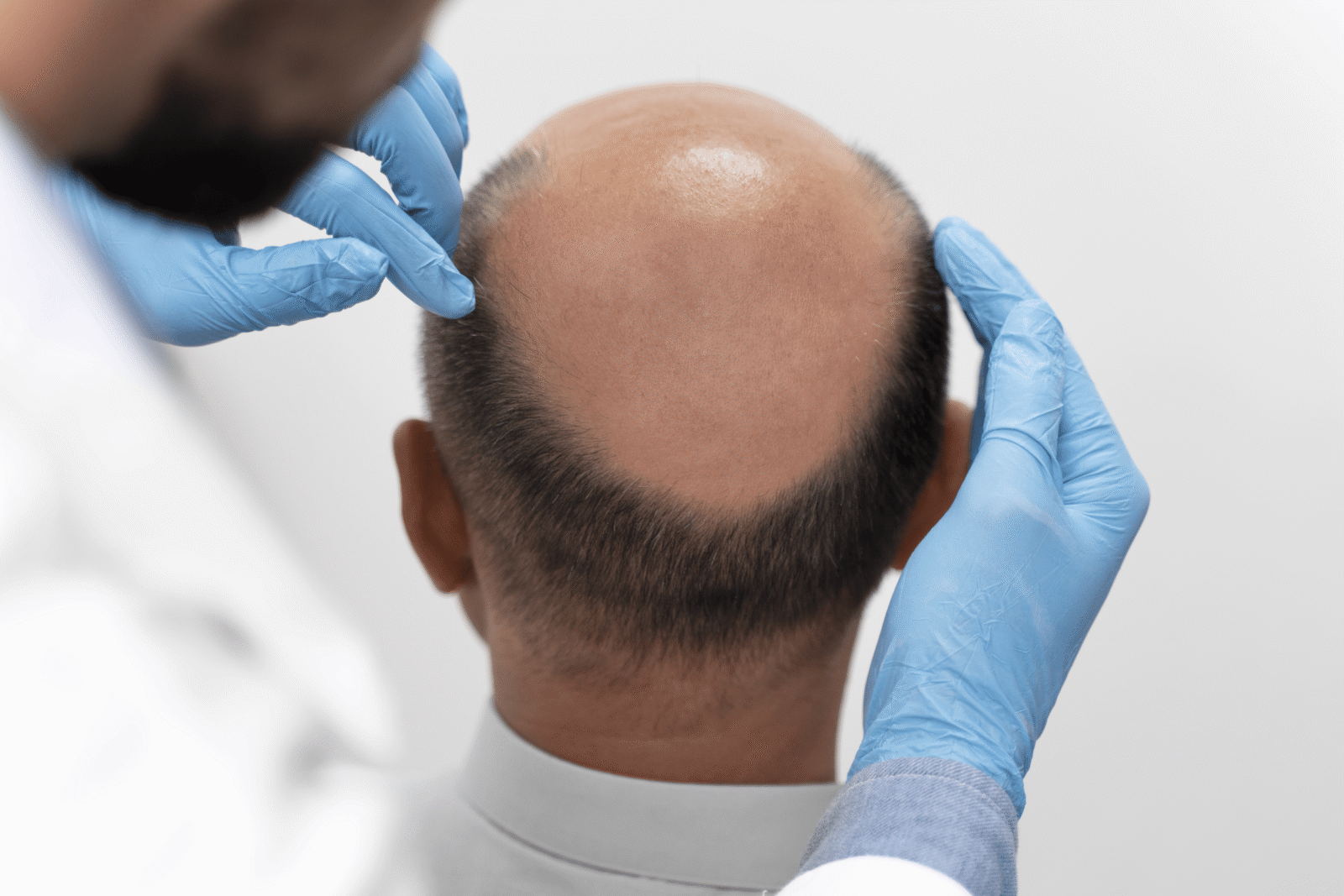
Our Hair Transplant and Hair Restoration Clinic specializes in the precise diagnosis and comprehensive treatment of hair loss and thinning conditions for both men and women. Al Khalidi Hospital collaborates with leading board-certified specialists and hair restoration surgeons to deliver cutting-edge surgical and non-surgical therapies, helping patients restore natural hair density and regain their confidence.
Our clinic provides a full continuum of personalized hair care services, including digital trichoscopy, surgical hair transplantation, Follicular Unit Extraction (FUE), Follicular Unit Transplantation (FUT), evidence-based medical therapies, and clinical trichology.
Hair Transplant & Restoration Center at Al Khalidi Hospital
The Hair Transplant and Restoration Center at Al Khalidi Hospital delivers an integrated diagnostic and therapeutic strategy tailored to uncover the underlying causes of hair loss—whether genetic, hormonal, autoimmune, or lifestyle-related—to formulate an effective, long-lasting treatment plan that promotes healthy, natural regrowth.
Comprehensive Surgical & Non-Surgical Solutions
- Follicular Unit Extraction (FUE): Advanced micro-punch harvesting of individual hair follicles from the donor area with minimal downtime, no linear scars, and rapid tissue healing.
- Follicular Unit Transplantation (FUT / Strip): Ideal for patients requiring maximum graft yield in a single procedure under precision surgical supervision.
- Facial Hair Restoration (Beard, Moustache & Eyebrows): Reconstructive restoration utilizing single-hair micro-grafts placed along natural facial growth angles and aesthetic contours.
- Platelet-Rich Plasma (PRP) Therapy: Autologous growth factor injections to revitalize dormant follicles, stimulate microcirculation, and accelerate grafted follicle stabilization.
- Mesotherapy & Targeted Scalp Infusions: Direct administration of bioactive peptides, vitamins, and minerals to arrest active shedding and boost hair shaft thickness.
- Clinical Trichology & Scalp Health: Polarized dermoscopic scalp evaluations, medical management of alopecia areata, seborrheic dermatitis, and androgenetic alopecia.
- Evidence-Based Medical Therapies: Clinically proven topical and oral regimens customized to stabilize progressive hair thinning and preserve existing native hair.
Why Choose Hair Restoration at Al Khalidi Hospital?
- Hospital-Grade Safety & Sterility: Procedures are conducted in fully equipped, internationally accredited surgical theaters (JCI & HCAC) adhering to the strictest infection control standards.
- Customized Natural Hairline Design: Precise mapping tailored to individual facial anatomy, age, and natural hair density for seamless, undetectable outcomes.
- Multidisciplinary Clinical Synergy: Led by consultant plastic surgeons and dermatologists supported by highly trained follicle technicians.
- Comprehensive Post-Procedure Follow-Up: Structured follow-up care, scalp hygiene protocols, and longitudinal progress assessments over 12 months.
Hair Restoration & Hair Transplant FAQs
What is the primary difference between FUE and FUT hair transplantation?
FUE involves extracting individual follicular units directly from the donor area, leaving virtually imperceptible dot scars and offering rapid recovery. FUT involves excising a thin strip of scalp tissue to yield a high density of grafts, typically recommended when extensive coverage is needed in a single session.
When will the final results of a hair transplant become noticeable?
Transplanted hairs naturally shed within the first 3 to 6 weeks. New, permanent hair growth begins around month 3 to 4, with substantial density and mature aesthetic results visible between months 9 and 12 post-procedure.
Are hair transplants suitable for female hair thinning?
Yes, hair transplantation is an effective solution for women experiencing localized thinning, receding hairlines, or stable androgenetic pattern loss, following thorough clinical screening to rule out underlying hormonal or nutritional imbalances.
Can PRP therapy replace surgical hair transplantation?
PRP therapy strengthens existing miniaturized follicles, reduces active shedding, and stimulates scalp health, but it cannot regenerate hair in areas where follicles are completely depleted or fibrosed. Surgical transplantation remains the definitive solution for bare scalp areas.
Is hair transplant surgery painful and what anesthesia is used?
The procedure is performed under gentle local anesthesia, ensuring patients experience minimal discomfort during both the harvesting and implantation phases. Most patients return home the same day and resume routine desk work within a few days.
Contact details and consultation booking